


There is a particular kind of frustration on a production floor that does not begin with a machine breakdown. The equipment starts normally. The temperature controller shows the usual setting. The operators are following the same production routine, and the raw material appears to be the same as yesterday.
But the finished product tells a different story.
Output begins to fluctuate. A batch that normally takes a predictable amount of time needs longer processing. Material behaves differently during handling. Product quality becomes inconsistent, or a line that was comfortably meeting its target begins falling behind.
Naturally, attention turns towards the machine. Someone checks the settings. Someone else suggests increasing the temperature, changing the speed or adjusting the feed. A few changes are made, but the results remain unpredictable.
The frustrating part is that nothing seems to have changed.
Except something probably has.
Industrial production is not controlled by machine settings alone. Every machine operates within a set of surrounding conditions: the material entering it, the condition of the equipment, the behaviour of connected systems, the working environment and even what happened during the previous shift. A small change in one of these areas can travel through the process and become a noticeable production problem.
That is where the real story begins.
The Same Settings Do Not Always Produce the Same Results
A machine setting is a selected operating condition, not a guarantee that the entire process will behave identically every time.
Consider a process that requires a particular temperature, feed rate or operating speed. The operator may enter the same values used during the previous production run. However, the actual conditions inside the equipment can still differ.
The incoming load may be heavier. Airflow may have changed. A material may be moving differently through a feeder. A temperature sensor may no longer be providing an accurate reading. Equipment that has been operating continuously may be in a different thermal or mechanical condition from equipment starting after a shutdown.
There is an important distinction between what the control panel is asking the machine to do and what is actually happening throughout the process.
A temperature controller, for example, may display the desired temperature while different locations inside a heating chamber experience different conditions. The amount, arrangement and weight of the product being processed can influence temperature distribution. Door seals, air circulation, exhaust settings and fan performance can also affect uniformity. These are among the variables identified in industrial oven technical guidance.
The display may look familiar. The production environment may not be.
This is why comparing only the recorded machine settings from two production days can leave important information out of the picture.
The Material May Be Different Even When It Looks the Same

Raw material variation is one of the easiest factors to overlook because visual inspection does not reveal every difference that matters to a process.
Two deliveries may carry the same material name, grade or product specification, but still behave differently during manufacturing. Differences in moisture, particle size distribution, bulk density, composition or flow characteristics can influence how material moves, heats, mixes, dries or reacts.
For example, a material with a slightly different moisture distribution may require a different amount of processing time, even when its average moisture value appears similar. A change in particle size can affect how evenly material is exposed to heat or how consistently it moves through the equipment.
The same issue occurs in bulk material handling. Fine particles may separate from coarser particles during movement. Material can form bridges, accumulate in a chute or create uneven flow through a hopper. The machine may continue running, but the amount and condition of material reaching the processing zone are no longer consistent.
An article in Processing Magazine describes how bridging, ratholing, buildup, caking and segregation can interfere with material flow and residence time in drying systems. These conditions can contribute to incomplete processing even when the equipment itself remains operational.
The interesting point is that a raw material problem does not always begin at the supplier’s gate. Storage conditions, handling, transport, exposure to the environment and the time between preparation and processing can also influence material behaviour.
For production teams working with heat-sensitive, wet, powdered or granular materials, this is particularly relevant. The performance of industrial drying systems depends not only on the equipment but also on the characteristics and consistency of the material being introduced.
A material that looks unchanged is not necessarily a material that will behave unchanged.
Sometimes, the Problem Has Been Building Since the Previous Shift
Not every production disturbance starts at the exact moment it becomes visible.
Some processes carry the effects of earlier operating conditions into the next production period. A machine may retain heat after shutdown, a filter may gradually accumulate material, or deposits may develop inside a chute or processing chamber. A feeder may deliver material unevenly because of a flow problem that has been developing over several hours.
These changes can remain unnoticed while production continues within acceptable limits. Eventually, they become large enough to affect output.
This creates a misleading situation. The morning shift sees the problem, but the cause may have developed during the previous evening’s operation.
The same principle applies to equipment condition. Mechanical components do not always move directly from operation to complete failure. Wear, loosened connections, changing vibration, partial blockage and reduced fan performance can gradually influence the process.
A machine may still be running,. It may not be performing in precisely the same way.
This is also why maintenance history can be more useful, than a record of whether the machine was serviced. A replacement, adjustment, cleaning activity or component change may have altered a working condition even when the machine was returned to service without a fault.
The production result is influenced by the history of the equipment not its present appearance.
A Small Change in One Area Can Affect the Entire Line
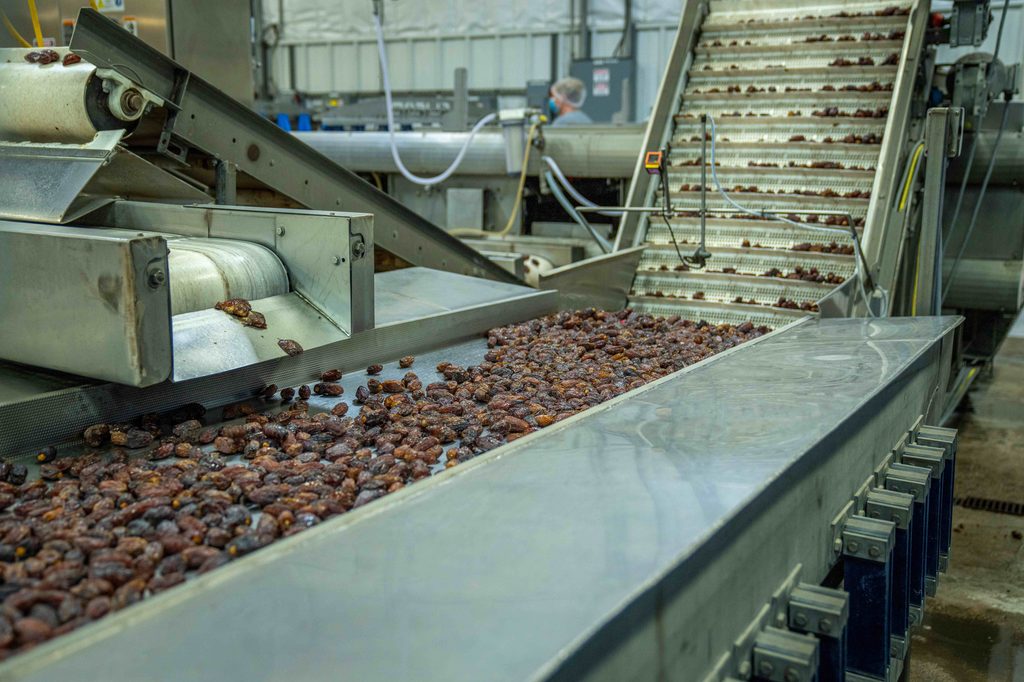
Most manufacturing processes are connected. The final product may pass through several stages before it reaches inspection, packaging or storage.
A disturbance in one section can therefore create a problem somewhere else.
Imagine a production line in which incoming material is being fed inconsistently. The processing machine may compensate for some fluctuations, but the change can still affect residence time, heating requirements, throughput or downstream handling. The final quality issue may appear much later than the original disturbance.
In continuous processing, this delay can make the source particularly difficult to recognise. The material being inspected now may have entered the process several minutes or even hours earlier, depending on the equipment and production arrangement.
An industrial case published by ABB describes an Indian steel pellet plant where dryer performance was affected by disturbances in feed rate, long process delays and changes in the calorific value of the fuel gas. These factors made it difficult to maintain the required temperature conditions. The case illustrates how disturbances in connected process variables can influence output even when temperature control is the visible concern.
The same idea applies beyond drying operations. A change in mixing consistency may influence coating quality later. An inconsistent heating stage may affect the condition of material entering the next operation. An unstable upstream feed can make a downstream machine appear unreliable.
Looking only at the machine where the defect becomes visible can therefore lead the investigation in the wrong direction.
The source and the symptom may be in two different places.
The Factory Environment Is Part of the Process Too
I notice that production equipment does not operate in isolation from its surroundings. Ambient temperature, humidity, ventilation, dust, utility conditions and changes in the factory environment can influence manufacturing operations. The extent of that influence depends on the material, equipment design and process requirements. Production equipment should not be dismissed simply because these conditions are outside the machine. For instance materials that readily absorb moisture from the air can behave differently after exposure to a humid environment. In a process involving air changes in incoming air conditions may also affect the amount of moisture that the system can carry away. Utilities deserve attention. Variations, in fuel quality, fuel pressure, steam availability, compressed air supply or electrical conditions can affect production equipment performance depending on how the system’s designed and controlled. This does not mean that every production problem is caused by the environment. It means that the machines surroundings are part of production equipment operating conditions. A production line may appear to have the recipe while the conditions supporting that recipe have changed.
When Operators Start Adjusting Everything, the Original Problem Gets Harder to Find
When production falls behind, there is pressure to recover quickly. It is understandable that operators want to do something rather than watch output deteriorate.
The difficulty begins when several adjustments are made at once.
The temperature is increased. The feed rate is reduced. The operating speed is changed. A setting is returned to its previous value, and another adjustment is introduced to compensate for the result.
Even when one of these changes improves the output, it may become difficult to identify which adjustment actually helped. Worse, one change may temporarily hide a separate issue without correcting it.
The next shift then inherits a machine operating under conditions that are different from the original production setup.
This is not necessarily an operator problem. In many plants, the person operating the equipment has to make decisions with incomplete information, especially when the process has limited monitoring or when production targets leave little room for investigation.
The more useful approach is to maintain this sequence. When did the product first begin to change? Was there a new material lot? Did the problem begin after cleaning, maintenance, a shutdown or a shift change? Did the actual temperature, pressure, flow or speed change, even though the setpoint remained the same?
The difference between changing a setting and understanding a process is significant.
Research on manufacturing process variation also points out that trial-and-error adjustments can overlook interactions between variables. Reliable measurements and monitoring of process behaviour over time are important when distinguishing normal fluctuations from a meaningful shift.
Sometimes the Measurement Is the First Thing That Changes
There is another possibility that receives less attention: the production process may not have changed as much as the measurement suggests.
A sensor can drift. An instrument may need calibration. A sampling method may have changed. One operator may take a sample from a different location or at a different point in the production cycle.
The result is a measurement that does not represent the same condition as before.
For example, a single sample taken from the beginning of a batch may not represent the entire batch. Material can vary across a container, tray, conveyor or processing cycle. Similarly, a temperature reading from one location cannot automatically describe conditions throughout an entire chamber.
Manufacturing discussions around scale-up and process consistency repeatedly raise questions about representative sampling, instrument accuracy and whether variations are coming from the product or the measurement equipment.
This distinction matters because decisions based on unreliable measurements can create unnecessary process adjustments.
Before assuming that the machine is producing a different result, it is worth establishing whether the result is being measured in a consistent and reliable way.
The First Clue Is Often the Pattern of the Problem
Not all changes in production look alike.
Sometimes the output changes suddenly after a material lot change. Sometimes it becomes progressively worse during a long production run. In other cases, the first few batches are acceptable, while later batches begin showing inconsistencies.
These patterns do not prove a particular cause, but they provide useful direction.
A problem that begins immediately after a component replacement deserves a different investigation from one that develops gradually over several weeks. A defect appearing only with one material batch deserves attention to incoming material characteristics. A temperature difference that occurs only under a heavier product load may point towards the interaction between loading and heat distribution.
This is where production records become more than paperwork. When batch details, actual operating readings, material changes, maintenance activities and quality results are recorded together, patterns become easier to recognise.
The objective is not to collect endless data. It is to preserve enough meaningful information to understand what was happening when the process was producing acceptable results and what was different when it stopped doing so.
A production line does not always announce the exact moment it begins moving away from its normal behaviour. Sometimes the first indication is a small change in output that appears unrelated to anything happening around the machine.
Production Consistency Begins Before the Machine Starts
A stable production process is the result of more than selecting the correct equipment or maintaining a fixed set of operating parameters.
It depends on the relationship between material, machine, method, people, utilities and the conditions surrounding the operation. Each part influences the others, and a change in one area can gradually become visible somewhere else.
That is why yesterday’s successful production run should be treated as a useful reference, not a promise that today’s run will behave in exactly the same way.
When a process starts producing unexpected results, the machine may be part of the problem. But it may also be responding to a change that began before the material reached it, during the previous shift or somewhere else along the production line.
The most valuable question is not simply what needs to be adjusted.
It is what has changed since the process was last producing the expected result.
Finding that difference can save more than a few machine adjustments. It can prevent good material from becoming rejected product, reduce unnecessary downtime and help a production team regain control without creating another problem in the process of solving the first one.
A machine can repeat its settings. Consistent production depends on everything around it repeating too.
FAQ
1. Can production quality change even when machine settings remain the same?
Yes. Machine settings are only one part of the process. Raw material characteristics, equipment condition, airflow, utility supply, environmental conditions and measurement accuracy can all influence the final result. The same setpoints do not necessarily guarantee identical operating conditions.
2. Why does the same raw material produce different results in manufacturing?
Material supplied under the same general specification may still vary in moisture content, particle size distribution, bulk density, composition or flow behaviour. Storage and handling conditions can also influence its properties. These differences may affect how the material responds during heating, drying, mixing or other processing operations.
3. Can weather and humidity affect industrial production?
They can, depending on the process and material. Humidity may influence materials that absorb moisture from the surrounding air. Ambient conditions can also affect processes involving air heating, cooling and moisture removal. The impact should be assessed against the actual process requirements rather than assumed to be the cause of every production variation.
4. How can a machine run normally but still produce inconsistent output?
A machine may continue operating while its performance gradually changes. Examples include reduced airflow, material buildup, worn components, inconsistent feeding, sensor drift or changes in loading conditions. The equipment may show no major fault, even though the conditions affecting product quality are no longer consistent.
5. Why do production defects sometimes appear long after a process change?
Some manufacturing processes have transport delays and extended residence times. Material may pass through several stages before reaching final inspection. A change introduced upstream can therefore affect the finished product later, making the original cause less obvious. Production timing and batch records help connect the defect with earlier process conditions.
6. Should operators increase machine temperature or reduce speed when product quality changes?
Not automatically. Adjusting temperature or speed without identifying the reason for the change can hide the original issue or introduce another one. The material condition, actual operating values, equipment performance and measurement reliability should be considered before changing process settings. Any adjustment should follow the equipment’s operating limits and approved procedures.
7. How can manufacturers identify whether inconsistent output is caused by raw material or equipment?
Manufacturers can compare material batch records, incoming material properties, actual machine readings, equipment history and quality results across affected production runs. The timing and pattern of the variation are also useful. Reliable sampling and measurement are important because an inaccurate measurement can lead to an incorrect conclusion about the source of the problem.